
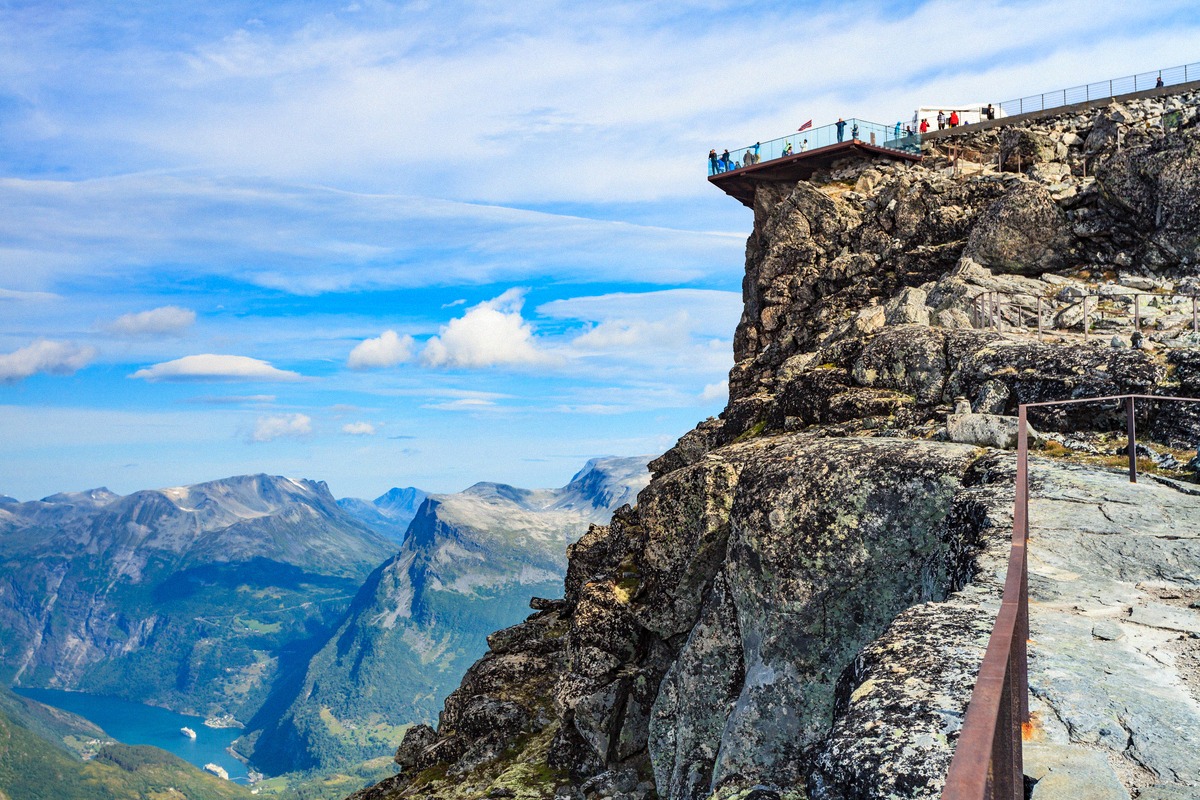
Dalsnibba
The drive up to the Skywalk above Geiranger
In the village, on the mountain roads and on the fjord
The sights of the Geirangerfjord are spread between Geiranger at the head of the fjord, the mountain roads above it and the water. In the village the Waterfall Walk climbs to the Norwegian Fjord Centre, and higher up are Flydalsjuvet, Ørnesvingen and Dalsnibba. You see the Seven Sisters from the water, and Trollstigen lies further north.
The drive up to the Skywalk above Geiranger
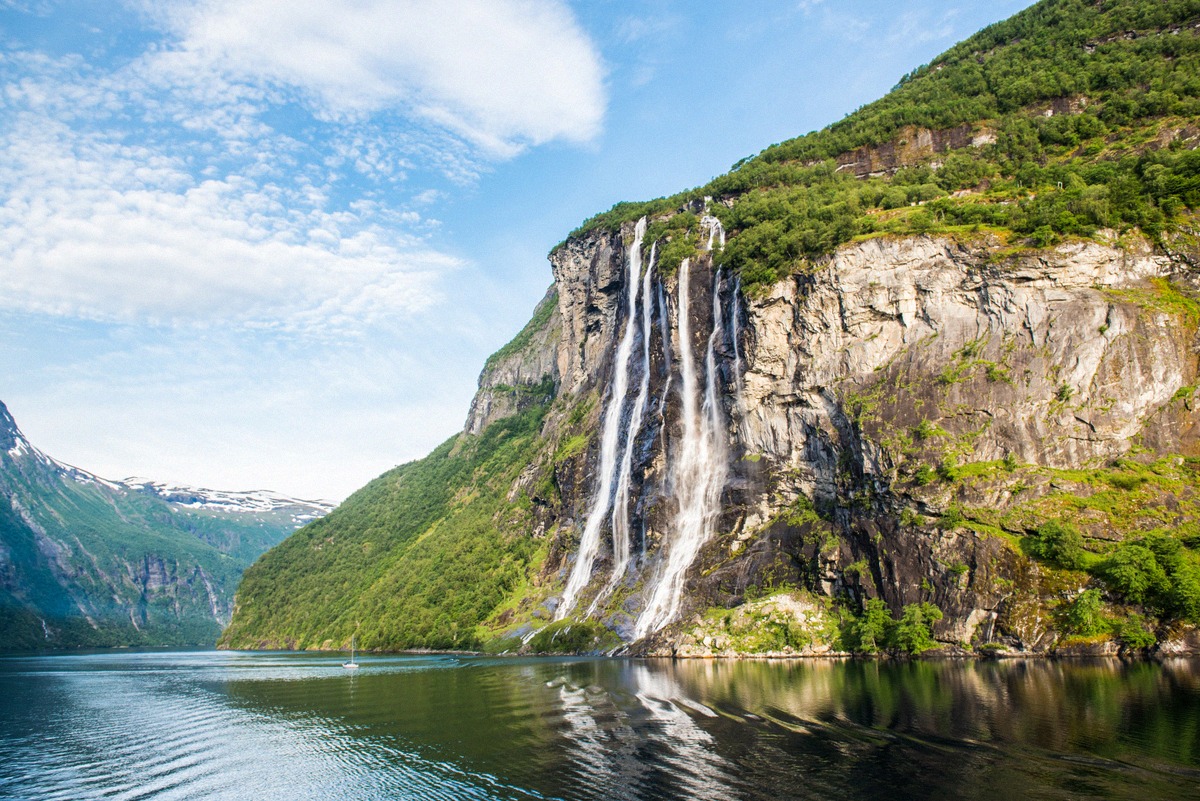
The waterfalls of the Geirangerfjord
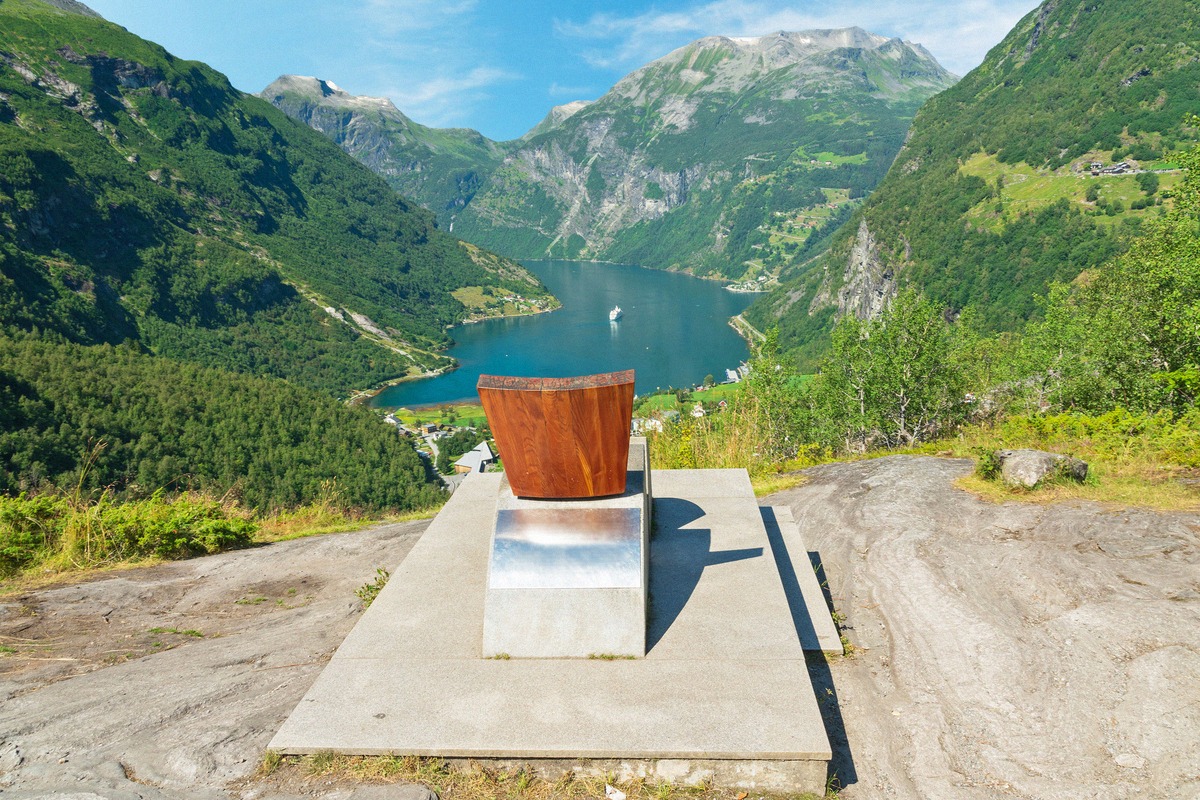
Where to look down on the Geirangerfjord from the road
No results found.
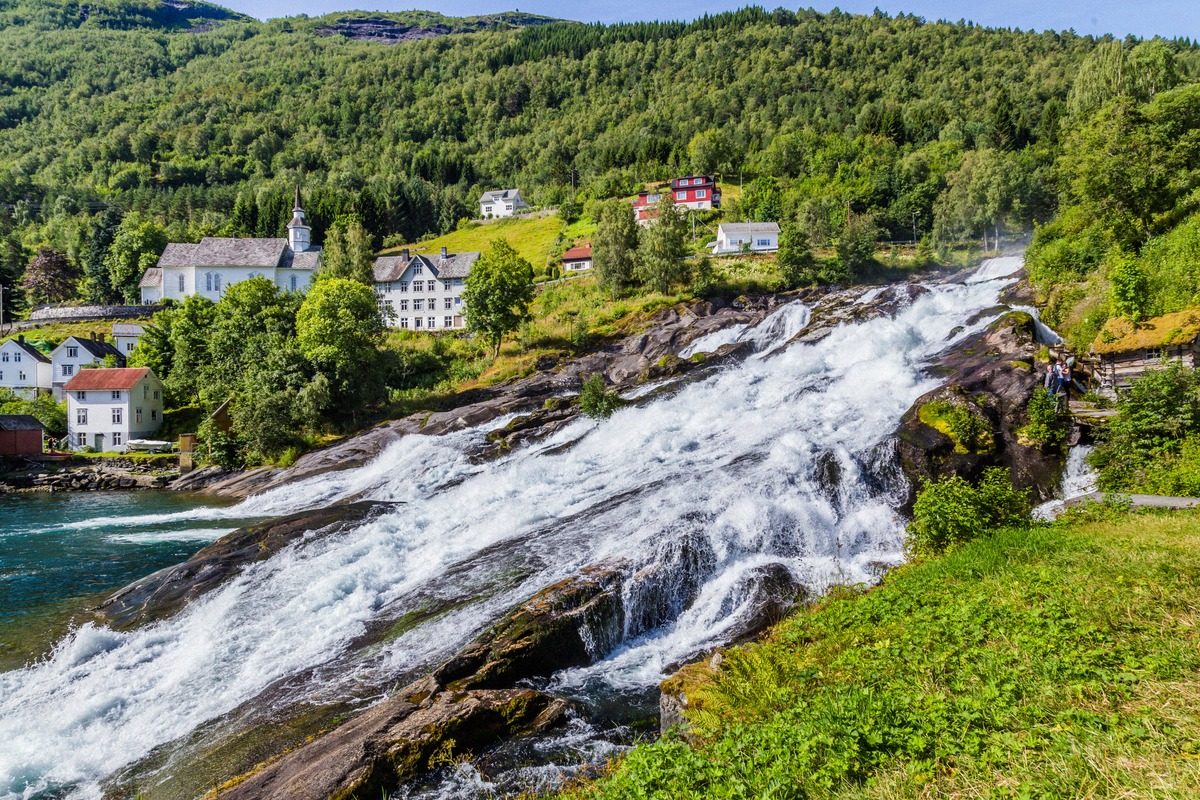
Places around the Geirangerfjord
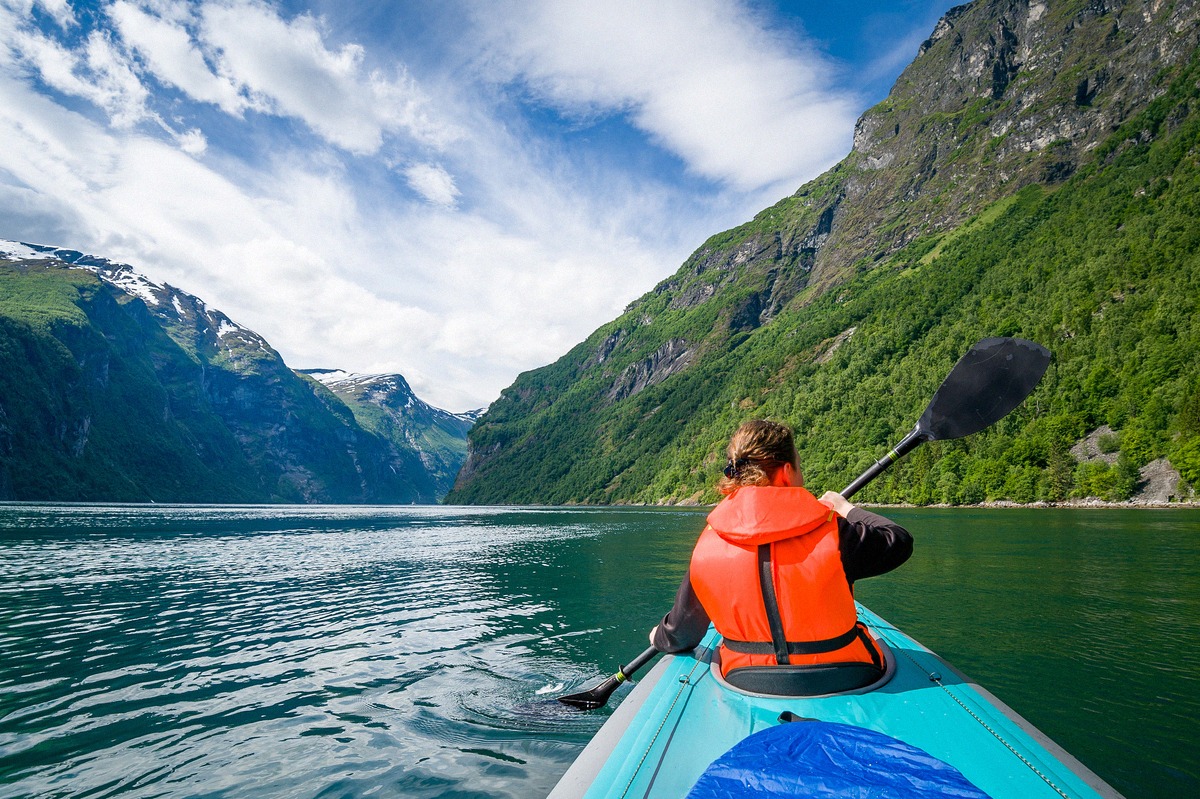
Boat trips, kayaking and tours on the Geirangerfjord
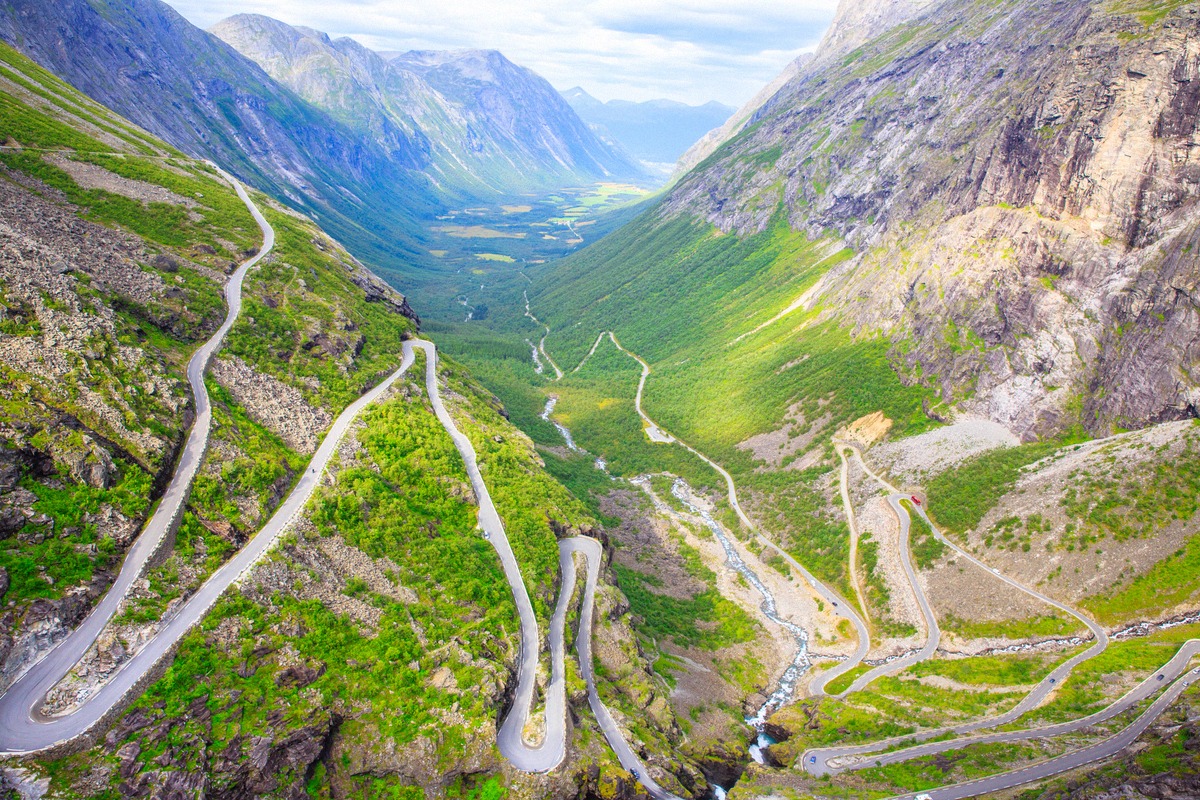
The mountain pass between Geiranger and Åndalsnes
The Norwegian Fjord Centre (Norsk Fjordsenter) on Gjørvahaugen is about 1 km from the village centre and is the visitor centre for the Geirangerfjord part of the UNESCO World Heritage Site (West Norwegian Fjords). Its official status as a World Heritage visitor centre was most recently renewed for five years.
Inside, a permanent exhibition covers the nature and culture of the Geirangerfjord. There is also a children’s room, a cinema, a café and a shop. Opening hours and admission are on fjordsenter.com. From the village centre the Waterfall Walk leads up to it.
From the village centre, the Waterfall Walk (Fossevandring) climbs 327 steps to the Norwegian Fjord Centre and the Union Geiranger hotel. It follows the Storelva river with the Storfossen waterfall and climbs 85 m, with landings and viewpoints along the way.
The Waterfall Walk is the lower part of Fosseråsa, which leads up to Storsæterfossen and in 2019 became Norway’s first trail to be designated a national hiking trail. Around 180,000 people walk the lower part every year; it has been built up with railings, stone paving and stone steps. The path can also be walked in winter, at least as far as the Fjord Centre, when the Storelva may be frozen.
The waterfalls on the fjord walls, such as the Seven Sisters, are outside the village; you see them from the water or from Ørnesvingen.
Geiranger Church is an octagonal wooden church from 1842 and the third church on this site.
The first tourist ship sailed into the Geirangerfjord in 1869. Kaiser Wilhelm II travelled to Geiranger eleven times, and a memorial stone near the Hotel Utsikten commemorates him. Since 2005 the Geirangerfjord, together with the Nærøyfjord, has been a UNESCO World Heritage Site.
Dalsnibba is almost 1,500 m high; from Geiranger it is 21 km, or about 30 minutes by car, to the top. The road is closed in winter. The Webcams show what it looks like up there.
The Seven Sisters plunge about 250 m straight into the fjord by the abandoned Knivsflå farm. They are best seen from the water, and opposite them is the Suitor (Friaren) waterfall.
The viewpoints Flydalsjuvet and Ørnesvingen are on the National Tourist Route Geiranger-Trollstigen. Flydalsjuvet, on the steep mountainside at the head of the fjord, looks down on Geiranger, while Ørnesvingen, at the very top of the eleven hairpin bends of Ørnevegen, takes in the village, the fjord and the Seven Sisters.
Trollstigen lies at the northern end of the same tourist route, about 104 km long in total, with the Eidsdal-Linge ferry crossing on the way. Its largest viewing platform sits 200 m above the road, and the mountain pass is closed in winter.
Boat trips and tours are listed under Tours, and Hellesylt at the other end of the fjord and other places nearby under Day trips.